English
 Español
 Français
 Português
 Pусский
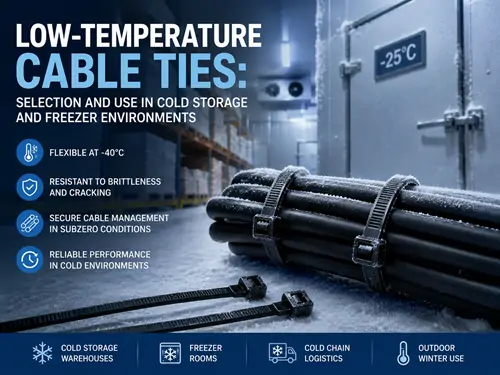
Low-Temperature Cable Ties: Selection and Use in Cold Storage and Freezer Environments
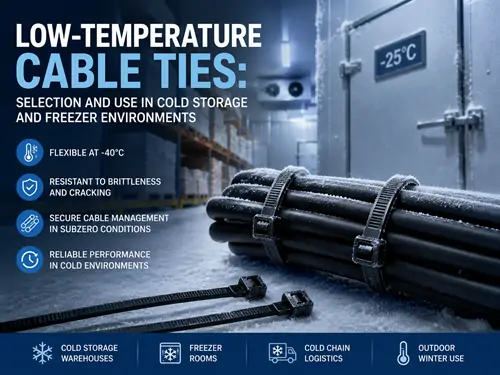
Cold storage facilities, freezer warehouses, and outdoor installations in harsh winter climates place unique demands on cable management components. Standard zip ties can become brittle and fail at subzero temperatures, but specially engineered low-temperature tie wraps remain flexible and durable even at temperatures as low as -40°C. The key difference lies in the material formulation—standard nylon undergoes a glass transition at low temperatures, losing its ductility, while low-temperature grades are modified to maintain molecular flexibility. This guide explains what makes a tie suitable for cold environments, how to select the right product, and what installation practices to follow.
For a complete overview of Boese's product range, visit the nylon cable tie product page.
Why Low Temperatures Matter for Zip Ties
Nylon is a semi-crystalline polymer, and its mechanical properties change significantly with temperature. At room temperature, these ties offer excellent tensile strength and flexibility. As the temperature drops, the polymer chains lose mobility, and the material transitions from a ductile to a glassy state.
This glass transition is the reason standard tie wraps can become brittle in cold environments. When a tie becomes brittle, it loses its ability to absorb impact or flex under load. A bundle that shifts slightly due to vibration or thermal contraction can cause a brittle tie to crack or snap—often without warning.
The glass transition temperature for standard PA66 is approximately 0°C to 10°C. Below this range, the material begins to stiffen noticeably. At -20°C and below, standard ties are significantly more prone to cracking during installation or service.
What Makes a Tie Wrap "Low-Temperature" Rated?
Low-temperature zip ties are manufactured using specially formulated nylon compounds that maintain flexibility at subzero temperatures. The material modification typically involves:
- Plasticizer additives that lower the glass transition temperature
- Modified polymer chains that retain molecular mobility at low temperatures
- Controlled crystallinity to balance strength and flexibility
Boese's low-temperature ties are engineered to remain flexible and durable even at temperatures as low as -40°C, making them ideal for freezer storage, cold chain logistics, and outdoor applications in harsh winter conditions. These tie wraps prevent brittleness and cracking, ensuring secure fastening in subzero temperatures while maintaining reliability.
Key Applications for Low-Temperature Ties
Low-temperature tie wraps are essential in any environment where temperatures drop below freezing. Common applications include:
| Application Environment | Typical Use | Why Low-Temperature Ties Are Required |
|---|---|---|
| Cold storage warehouses | Bundling sensor cables, securing lighting fixtures | Temperatures typically -18°C to -25°C; standard ties become brittle |
| Freezer rooms | Organizing control wiring on refrigeration equipment | Frequent temperature cycling accelerates material fatigue |
| Cold chain logistics | Securing temperature sensors on pallets and containers | Outdoor exposure during transport in winter conditions |
| Food processing plants | Cable management in chillers and freezers | Sanitation requirements plus cold exposure |
| Outdoor telecommunications | Securing cables in northern climates | Winter temperatures can drop below -30°C in many regions |
| Arctic and sub-Arctic installations | Any cable bundling in extreme cold | Ambient temperatures regularly below -40°C |
Installation Temperature vs. Operating Temperature
One of the most common mistakes in cold-environment cable management is overlooking the installation temperature. Even a tie rated for -40°C service may fail if it is installed at temperatures below its recommended installation range.
The installation temperature is the ambient temperature at which the tie is actually tightened around the bundle. For standard nylon ties, the recommended installation temperature is typically above 0°C. At lower temperatures, the material is less flexible and more prone to cracking during the tightening process—particularly if the tie is pulled to its full tensile strength.
For low-temperature tie wraps, the installation temperature range may be extended, but buyers should always verify the specific rating for the product they are considering. When installing ties in cold environments:
- Allow ties to warm to room temperature before installation if possible
- Use proper tensioning tools to avoid over-tightening
- Inspect each tie for signs of stress or cracking after installation
- Consider using wider ties for better load distribution in cold conditions
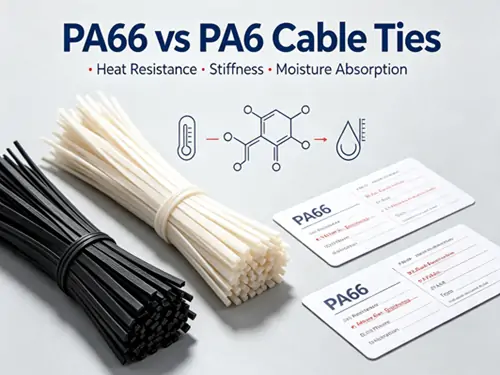
Material Selection: PA66 vs. Specialized Low-Temperature Formulations
While standard PA66 nylon cable ties are rated for continuous use down to -40°C, the material's performance at the lower end of this range differs significantly from specialized low-temperature grades.
| Property | Standard PA66 | Low-Temperature Grade |
|---|---|---|
| Continuous use low temperature | -40°C | -40°C |
| Flexibility at -20°C | Reduced, stiff | Maintains flexibility |
| Installation temperature | -10°C minimum | Extended range |
| Brittleness risk at low temperature | Moderate | Minimal |
| Impact resistance at low temperature | Reduced | Maintained |
| Cost | Lower | Higher |
The key takeaway is that while both products may have the same "minimum temperature" rating, how they perform at that temperature is what matters. Standard PA66 may technically survive at -40°C but will be significantly stiffer and more prone to damage from impact or vibration. A specialized low-temperature grade will maintain its flexibility and toughness, providing longer service life in demanding cold environments.
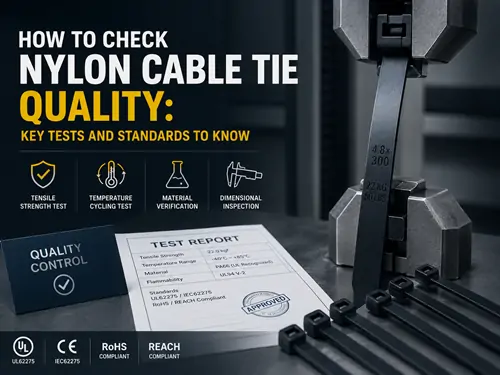
For detailed material specifications and test methods, visit the quality assurance page.
Common Failure Modes in Cold Environments
Understanding how these ties fail in cold conditions helps buyers make better selection decisions:
- Installation cracking: The tie cracks during tightening because the material is too stiff at installation temperature
- Stress cracking: Over-tightening creates micro-cracks that propagate under cold conditions
- Impact fracture: A bundle shifts or is struck, and the brittle tie snaps
- Vibration fatigue: Combined with cold-induced stiffness, vibration causes premature failure
- Thermal cycling fatigue: Repeated expansion and contraction from temperature changes stresses the material
Each of these failure modes can be mitigated by selecting a properly rated low-temperature tie and following appropriate installation practices.
Selection Checklist
Before specifying tie wraps for cold environments, consider the following verification steps:
- Confirm the minimum operating temperature of the application—both continuous and occasional exposure
- Verify the installation temperature at the job site
- Assess temperature cycling frequency and range
- Consider mechanical loads including vibration and impact
- Evaluate chemical exposure from cleaning agents or de-icing compounds
- Confirm the tie's tensile strength at the minimum operating temperature
- Check if special requirements apply (UV resistance for outdoor use, food-grade for processing areas)
Frequently Asked Questions
Q: What temperature can standard nylon zip ties withstand?
A: Standard nylon ties typically operate between -40°C and +85°C. However, at temperatures below -10°C, they become significantly stiffer and more prone to cracking during installation. For reliable performance in cold environments, specially formulated low-temperature grades are recommended.
Q: Do I need low-temperature ties for a freezer that operates at -18°C?
A: Yes, for reliable long-term performance. While standard ties may technically function at -18°C, they become brittle and more susceptible to failure from vibration or impact. A low-temperature grade will maintain flexibility and provide a longer service life.
Q: What is the difference between "low temperature" and "standard" tie wraps?
A: Low-temperature tie wraps use modified nylon formulations with plasticizers and optimized polymer chains to maintain molecular flexibility at subzero temperatures. Standard ties become stiff and brittle as temperatures drop, increasing the risk of cracking or failure.
Q: Can I install zip ties in cold storage without warming them first?
A: It is recommended to allow ties to reach room temperature before installation if possible. If installation in cold conditions is unavoidable, use low-temperature grade ties with an extended installation temperature range and avoid over-tightening.
Q: What causes nylon ties to crack in cold environments?
A: Cold temperatures cause nylon to transition to a glassy, brittle state. Cracking can occur during installation (tightening a stiff tie), from impact or vibration during service, or from stress concentration at sharp edges on the bundle.
Q: Does Boese offer low-temperature zip ties?
A: Yes. Boese offers specially engineered low-temperature tie wraps that remain flexible and durable at temperatures as low as -40°C. These products are ideal for freezer storage, cold chain logistics, and outdoor applications in harsh winter conditions.
Conclusion
Selecting the right ties for cold environments requires understanding the difference between a product that can "survive" a low temperature and one that will perform reliably over its service life. Low-temperature zip ties are formulated to maintain flexibility, toughness, and tensile strength at subzero temperatures—preventing the brittleness and cracking that cause standard ties to fail in freezers, cold storage, and outdoor winter applications.
When evaluating tie wraps for cold environments, verify both the operating temperature and the installation temperature range. Consider the mechanical demands of the application—vibration, impact, and load—and choose a product that maintains its performance across the full temperature spectrum the installation will experience.
To explore available low-temperature configurations, visit the nylon cable tie product page. For application-specific recommendations or to discuss your cold environment requirements, contact the Boese sales team directly.
For more information about the company and its product range, visit the Boese official website.
Disclaimer: This article is provided for general informational purposes only and does not constitute professional engineering advice, quality certification, or product warranty. Temperature ratings, material properties, and performance criteria mentioned are based on general industry practices and manufacturer specifications. Buyers should independently verify all product specifications with their supplier and, where appropriate, engage qualified professionals to assess product suitability for their specific applications. Actual performance depends on operating conditions, installation practices, and environmental factors.